The Slow Drift Into Alien Generated Code
August 22, 2026 · 09:00 UTC
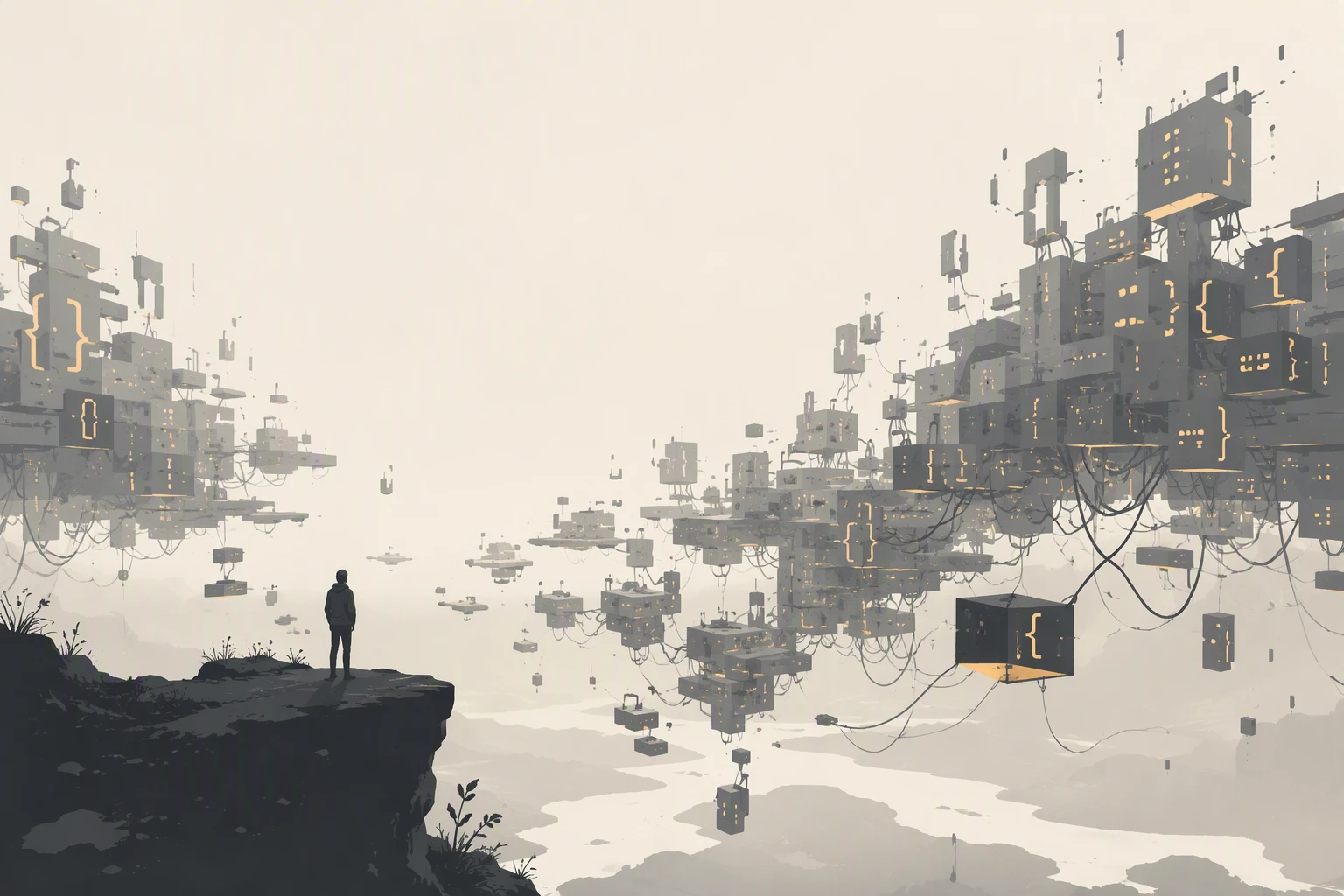
Handing a project fully to a language model feels like a shortcut worth taking, since the machine works on its own while the code arrives looking clever, futuristic, and impressive at first glance, yet each fresh session quietly stacks another layer of verbose output that grows harder to read until the whole thing starts to feel like some stranger wrote it late one night.
Autonomous coding sells a dream of effortless progress, though the real bill arrives later as maintenance that nobody agreed to.
Small projects hide this drift because a few hundred lines stay simple enough to follow, yet the moment a codebase climbs past ten thousand lines its structure blurs and reading generated work begins to feel like wandering through a stranger house.
Chasing Effortless Progress
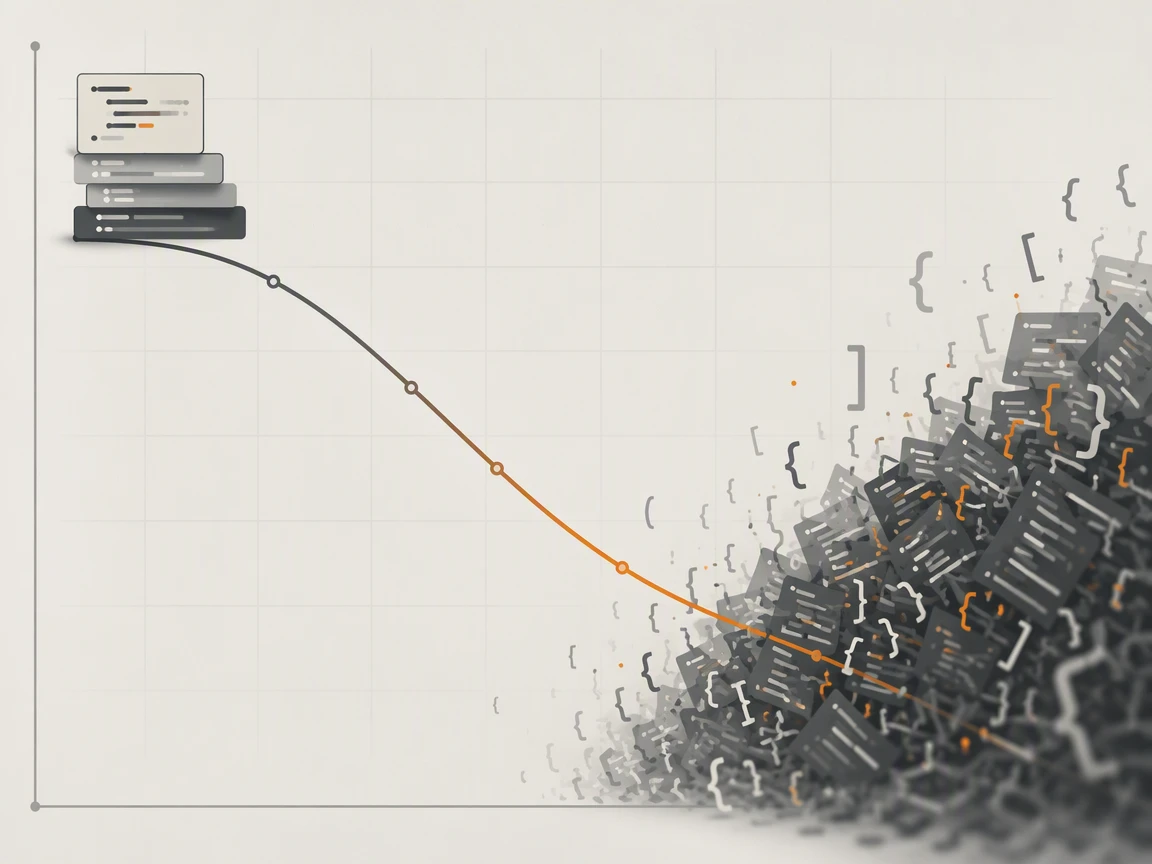
Positive energy carries the early experience because the output looks advanced and the pace feels unreal, so the temptation to lean harder on the model grows with every task it finishes without any obvious complaint from the person watching it run.
Verbosity comes from the core job of a model, where every thought turns into words because text remains the only channel it has.
Treating generation as pure text prediction makes the behavior easier to accept, since a model cannot hand over intent or a diagram of what it means, so it pours everything into extra classes, wrappers, and defensive branches that read like an essay when a short answer would have carried the same result with far less ceremony around the actual working logic underneath.
Overbuilding a Simple Flow
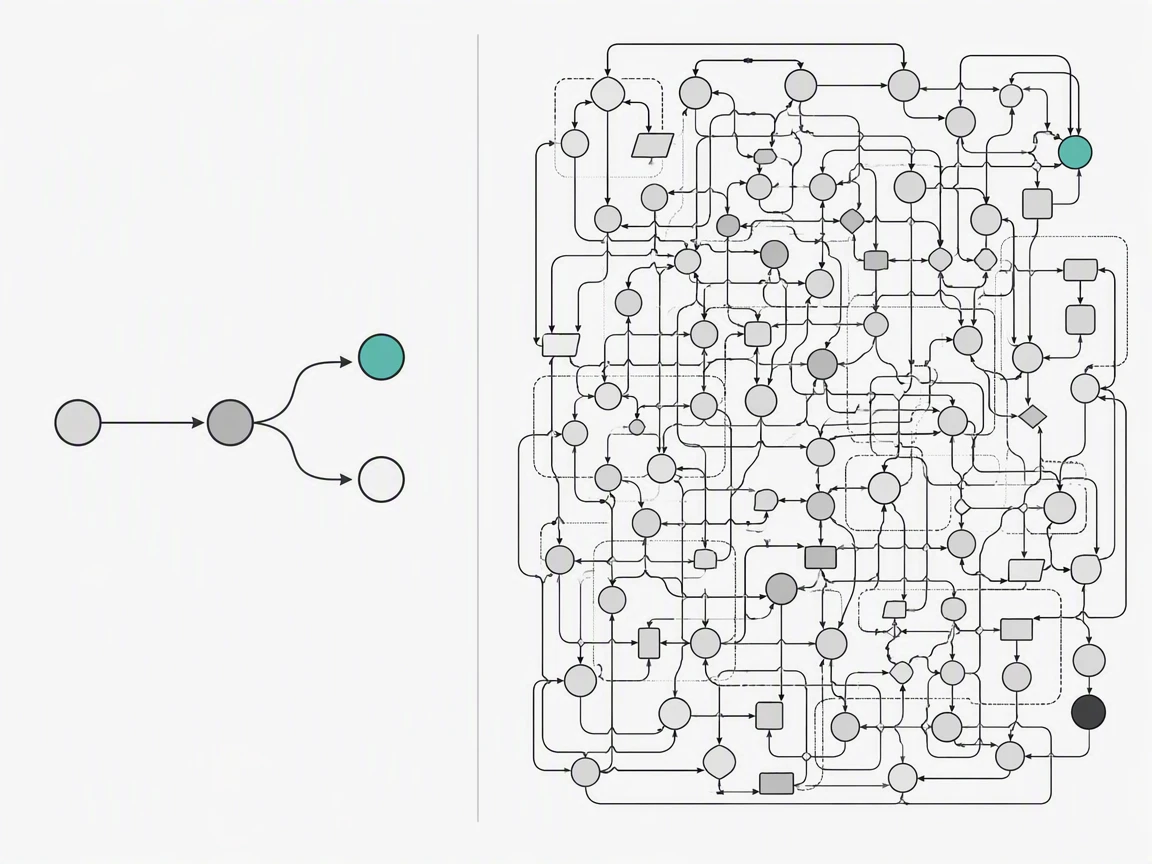
Overbuilding shows up fast once a simple request meets an eager model, and one small pipeline task becomes the clearest example of how far the machine will run when nobody stops it, because a job that needed a handful of plain conditions came back wrapped in structure that clearly belonged to a much larger system than the one that was actually being built here in practice.
Asking for a short pipeline flow should return a few branches, yet the reply arrived as a full engine with parts nobody wanted.
Instead of three quick conditions the model produced a finite state machine with formal states, a transition table, event handlers, and one class per state, while the flow it had to cover stayed linear and plain enough to walk through in one breath.
Paying the Maintenance Tax
Running code alone never tells the full story, because the generated solution worked on the first try and still left behind extra weight that turned every later change into a slow negotiation with structure existing only to please a machine idea.
Different models carry different habits, so mixing their output across a project drifts the codebase into a messy uneven blend.
Stretching a Model Past Context
Repo maps from tools like Aider help a model see the shape of a project before touching it, though a sprawling codebase packed with many varied features still stretches beyond what any single window can hold while staying sharp about every corner.
Endless looping appears in some runs, where a model circles the same spot over and over while burning tokens and stalling out.
Whether the loop comes from a weak prompt or from context that arrived too scattered stays genuinely hard to tell from the outside, since a saturated window pulls prediction away from the goal and the model starts asking for details the prompt already spelled out, which breaks the smooth flow that autonomous work was meant to protect across a long running session.
Betting on Better Workflows
Depending on a stronger model tempts every builder, yet the deeper limit today lives inside workflow rather than raw horsepower.
Booming technology moves through rough early years while companies race to ship the best version they can manage, and the honest bet stays that this keeps improving, hopefully toward tools that respect the reader who must sit inside the living code.