Prebuilt Styles Buy Speed and Sell Control
November 24, 2025 · 08:00 UTC
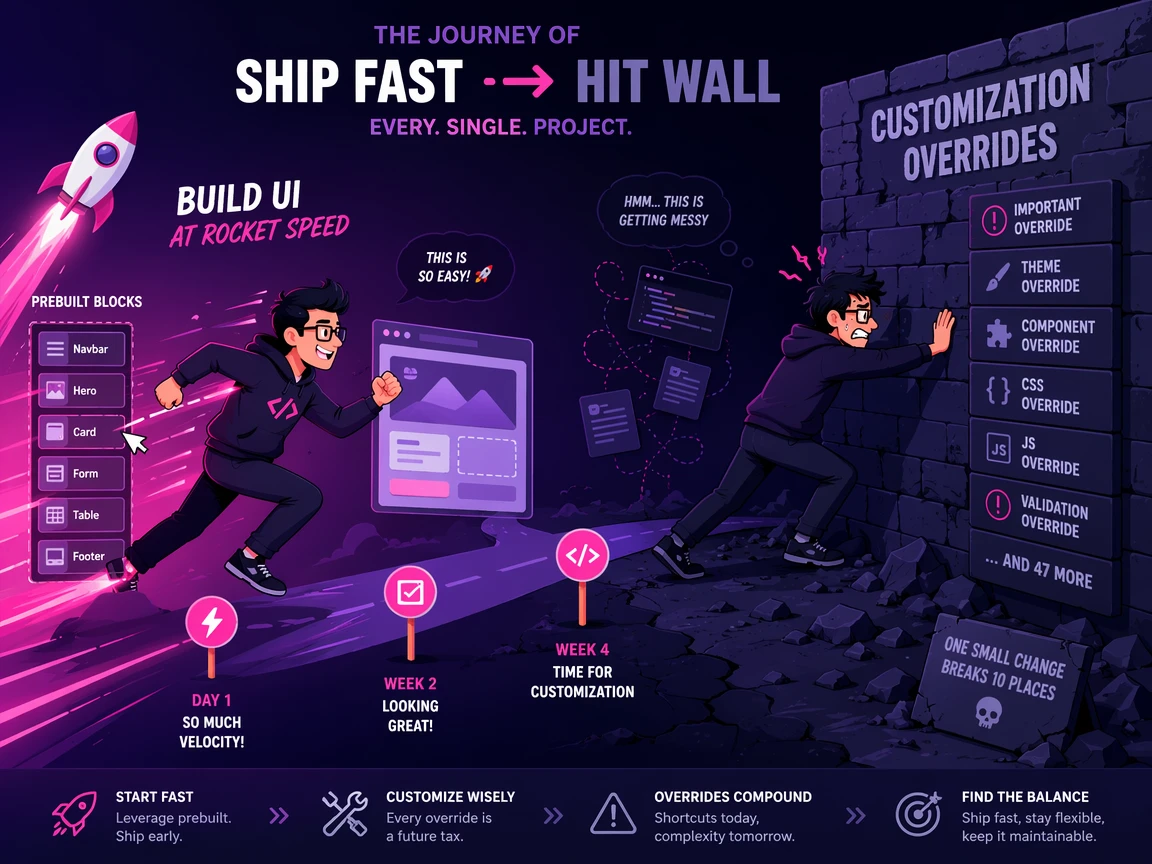
A brand new frontend project very often starts out with a framework CSS library simply because it quietly removes the tiresome need to write any custom styles at all, and for a good long while the whole team just moves along quickly as fresh buttons, grids, and forms all appear neatly on the page without a single hand-written line of CSS anywhere in sight at all yet.
That early speed is entirely real, but it is also quietly a loan taken out against the future, because every single convention the framework gently imposes slowly becomes a hard wall the moment the design truly needs to step outside the patterns.
The real question is never whether framework CSS is genuinely useful, it is only whether the team can afford its full cost later.
The Early Velocity Is Genuine
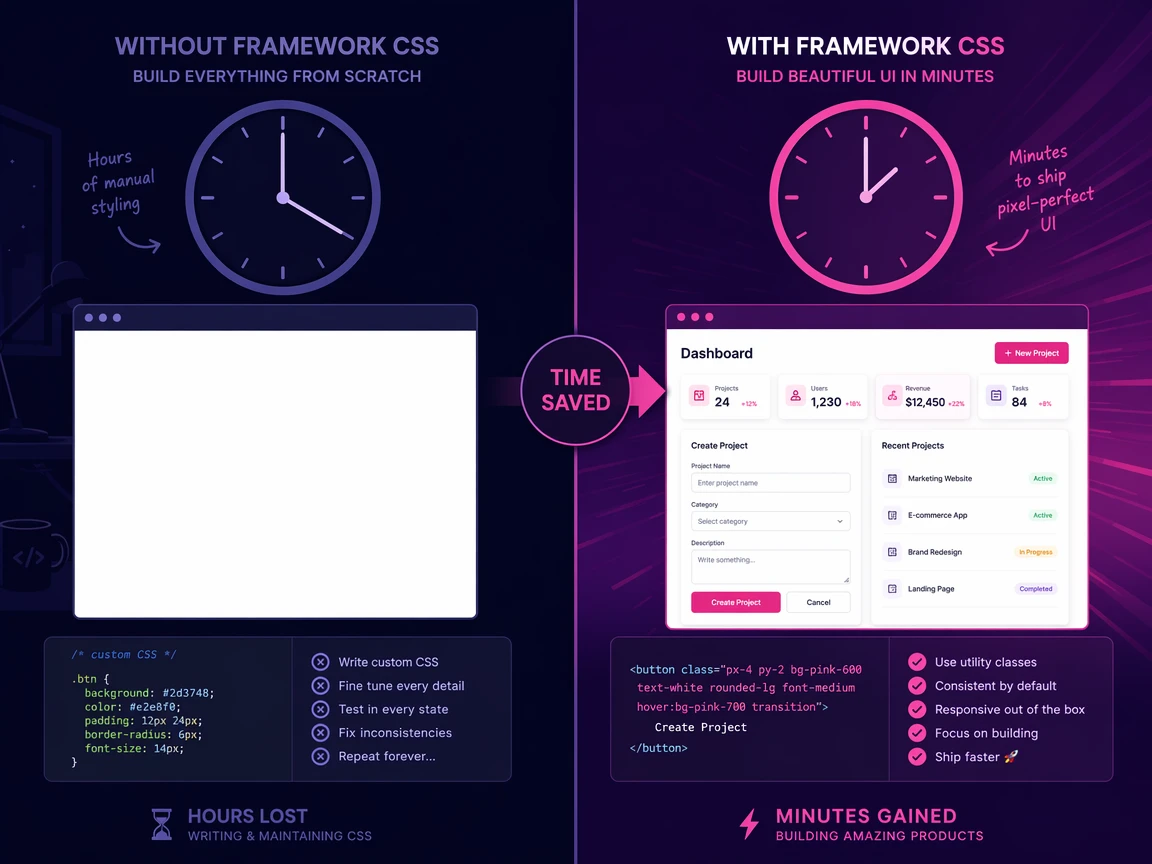
Framework CSS quietly hands a team a shared visual language, a set of prebuilt components, handy responsive utilities, and sensible design tokens right out of the box, and that whole tidy package instantly removes weeks of slow, grinding decisions about spacing, color, typography, and overall page layout before anyone has even opened up a single real design file at all.
For quick prototypes, internal dashboards, and simple admin tools, this really is a clear and honest win, because the product genuinely needs to exist first before it ever truly needs to be unique, and the framework reliably gets it there faster.
Raw speed at the very start is really the main product that these frameworks are all quietly selling to just about everyone here.
The Walls Appear Gradually
The very first custom design request is usually quite manageable on its own, a slightly different button radius, a fresh brand color, one small one-off layout, but each override quietly adds the exact complexity the framework was supposed to remove.
Soon enough the whole project quietly carries a tangled mix of framework classes, arbitrary one-off values, scattered custom CSS, and a growing pile of important override rules, and the original clean convention that once made the codebase feel so very fast slowly hardens into a confusing patchwork that every new developer genuinely struggles even to read at all.
The real cost is never really the very first small override, it is the slow, grinding arrival of the hundredth one much later.
Customization Fights the Framework
Every framework quietly makes firm assumptions about naming, structure, and state handling, and a breaking design leaves two ways.
Fighting the framework quietly means writing increasingly specific overrides, quietly reaching for hidden escape hatches, and patiently explaining strange exceptions in every single code review, while fully abandoning it means either a slow and painful full migration or a gradual drift into an awkward hybrid that ends up carrying the worst of both worlds at once.
A framework that clearly speeds up the very start of a project can just as easily slow down the whole muddled middle later on, once the steadily growing design finally pushes hard past the neat little set of assumptions it quietly baked in so early.
When the Trade Is Worth It
The trade genuinely makes sense once the team has a known design system that closely matches the framework, when the product truly does not need pixel-perfect customization, or when the honest goal is simply to ship a functional interface first.
It makes noticeably less sense when the brand quietly demands genuinely unique interactions, when the real accessibility needs clearly differ from the shipped defaults, or when the long-term plan already quietly involves a fully custom design system that will slowly and eventually grow to replace the whole entire framework entirely somewhere down the road later on.
The whole key is simply to know clearly which side of this particular trade the project actually sits on right now here today.
Choose With the Exit in Mind
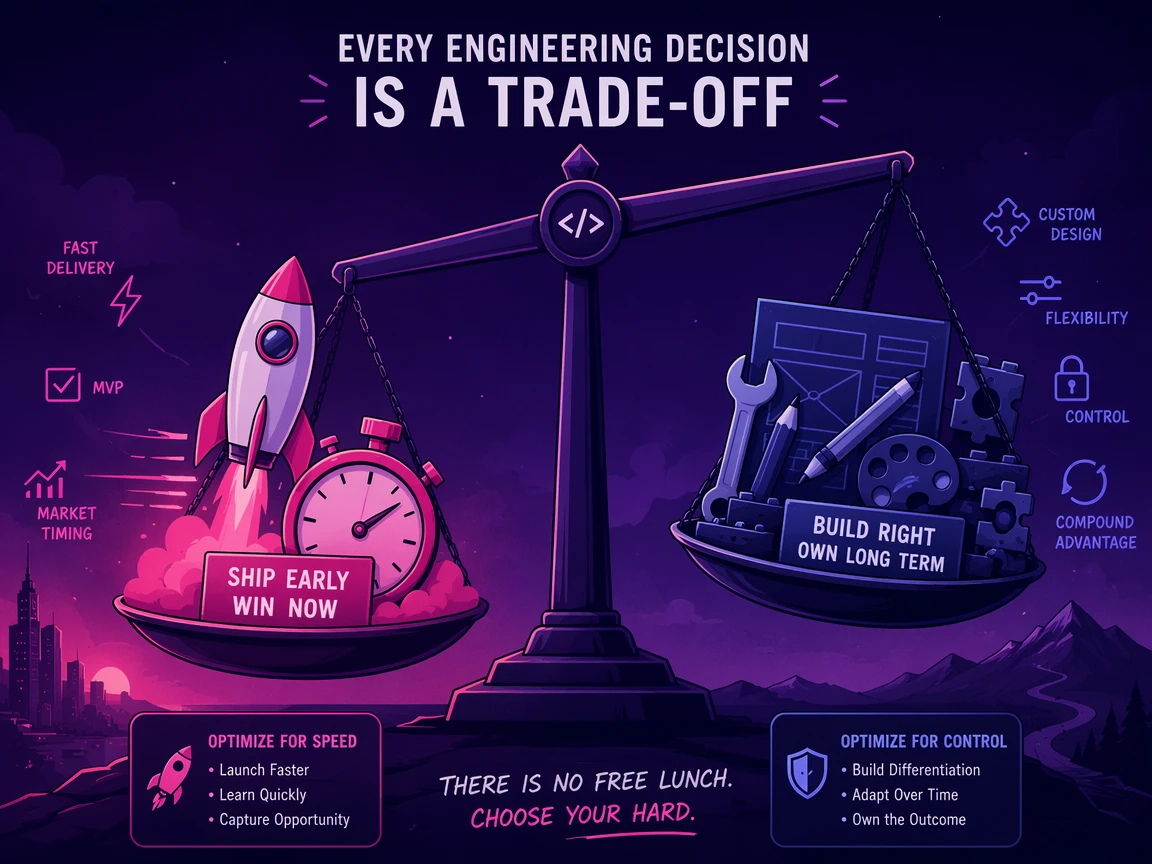
Teams should always pick a framework CSS library knowingly and with their eyes fully open, holding a rough plan for exactly what happens later once the growing design finally outgrows it, rather than quietly pretending to themselves that the chosen framework will somehow serve every possible future need forever without ever once asking for anything at all in return.
The real cost is never the framework itself, it is the slightly surprised realization that a fast start quietly came with strings.
A genuinely wise team happily enjoys the early speed while quietly watching out for the small but telling signs that it is finally time to sit down at last and pay in full for some real, bespoke custom design work that is truly all its very own.