NeaByteLab Bets Five Years on Pure Proof
May 2, 2025 · 21:37 UTC
Betting an entire identity on one idea sounds reckless until that idea becomes the only thing genuinely worth defending, and this experiment stakes everything on a single quiet claim, that work alone can earn the trust a name usually demands upfront.
Function calling arrived when OpenAI shipped it in mid 2023, and that moment felt less like a routine feature release than the first real crack in an old assumption about who gets to build software and how fast an idea reaches a shipped solution.
Naming the Wager
NeaByteLab reads as Nea for new, Byte for byte code, and Lab for a place to run experiments, opened in April 2025 as a deliberate wager rather than a portfolio dressed in corporate language, and a pseudonym sits at the center on purpose, chosen instead of a real identity to test whether human and machine truly stand as far apart as most people quietly tend to assume.
Listing years of experience across a long row of familiar company logos says almost nothing now, since a model can produce brilliant output on demand, so skill only ever surfaces through the work itself and the honest trail of activity behind it.
Holding the Thread
Consistency across a whole body of work over time is the one thing a lone model cannot fake, because a single output can dazzle while a connected narrative spanning years takes a real person to hold together into one honest story that truly lasts.
Machines already build software, solve stated problems, and ship working solutions, the exact outcomes a company pays a person to deliver, so the line separating human output from machine output turns out far thinner than most people are ever quite willing to admit out loud, and what genuinely matters is no longer who or what produced the work but only whether it holds up.
Borrowed Against Earned
Freelance platforms proved this logic years ago, since nobody hires a legal name there, they hire a portfolio and a track record instead, and whether the person behind it matters far less than whether the work exists and survives close inspection, so a real-world identity mattering here makes little sense at all once that model already runs across the whole wide world.
Freelancers still borrow credibility from the platform standing behind them, its ratings, its reviews, its verification badge, yet strip all of that support away and only the raw work remains, which is exactly the condition chosen here from day one.
Starting From Zero
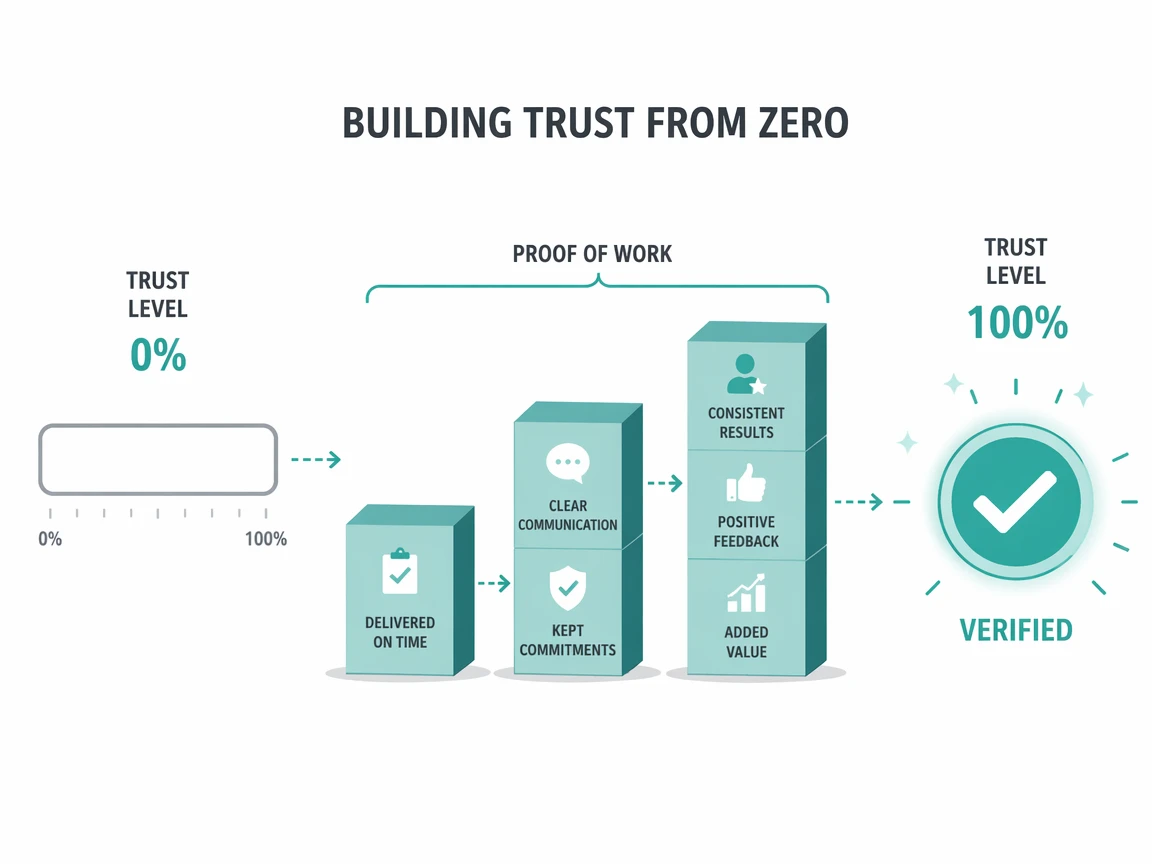
Zero trust, zero reviews, and no authority vouching for anything marks the opening position, and that emptiness is not a flaw to hide but the entire point, because credibility built from nothing proves the thesis in its purest form, so a track record already fully mature at the start would quietly drain the meaning out of the whole test long before it even begins.
Anonymity raises the stakes here rather than lowering them, since a real name quietly borrows weight from a known face, a personal history, and a wider network, while a pseudonym forfeits all of it and earns every bit of trust through evidence alone.
Measured in Years
Weeks and months are simply the wrong unit of measure for a bet like this, because the wager runs across a full five-year window from 2025 to 2030, long enough for either a quiet collapse or slow, verifiable trust to reveal what the daily work earns.
Whether a faceless name earns trust stays open until the window closes, and by 2030 the record either stood alone or never could.